
How to Build Sales Champions: 5 Takeaways from Nate Nasralla
Nate Nasralla's session on building internal sales champions emphasizes five key strategies to help sales teams close larger deals more quickly by effectively cultivating and leveraging influential advocates within client organizations.
Blog Post
How to Build Sales Champions: 5 Takeaways from Nate Nasralla
Published: October 28, 2026
Share this article:


If you want to close bigger deals faster, here's what you need to know from Nate Nasralla's recent session on building internal champions:
- Give your champion a soundbite. Four sentences (the change, the action, the positive outcome, the cost avoided) that they can repeat in rooms you're not in.
- Build a one-page business case. Anchor it to the buyer's executive priority, then add customer data, a recommended approach, a measurable payoff, and the full investment.
- Build it together. Co-writing the case tests your champion's commitment, pulls in other stakeholders, and makes the case theirs.
- Use the business case to focus deal review. Put business cases side by side to quickly see which deals are qualified and where to coach.
- Track buyer commitment over time. Watch what the buyer adds, validates, and their level of urgency to tell whether a deal is gaining or losing momentum.
In this webinar follow up, we'll break each of those items down for you.
Nate Nasralla closed a six-figure enterprise deal. Then he struggled to repeat his success.
Looking for answers, he went back to Charles, his internal champion in that first deal he won. Charles showed him internal emails, memos, and materials he'd created to help sell the purchase to others on the buying committee. That's when it struck him: "Sellers don't close deals. Our champions do."
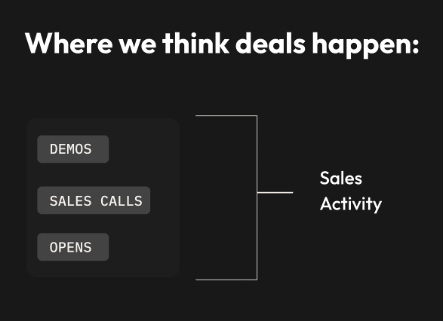
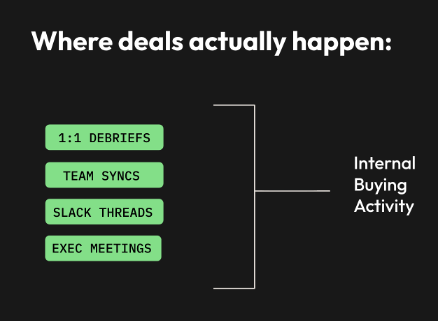
Your champion faces the same work: winning support in conversations you won't attend. They need to explain why the purchase matters and answer their colleagues' objections. You can help them prepare. Because as Nate shared, "if you look at the point where a buying decision is actually being made and the debates around priorities, problems that are specific to that individual account… We're not in the room for those. In fact, buying committees every single day, every single week, right now, are having conversations about you without you."
In our recent webinar, How to Build Champions That Sell For You, Nate, now CEO of Fluint, shared practical frameworks you can use to help champions make that case, including a four-sentence soundbite and one-page business case template. Here are five takeaways you can apply to your next deal.
1. Give your champion a 4-Sentence Soundbite they can repeat
Since your internal champion needs to make the case, it's essential to make your case succinct and impactful. You need to break through all of the internal debates where you're not in the room and grab mindshare. Make the reason to act simple and compelling enough for your champion to explain accurately to the rest of the buying committee.
The 4-sentence soundbite is composed of:
- Change (Current State): What has changed in the customer's business or market that makes action relevant now?
- Action (Decision): What specific response should the customer take? Frame a specific action they can take that you can enable to lead them to a positive outcome while avoiding a negative one.
- Positive outcome: What would that response help the business achieve?
- Negative outcome avoided: What cost, risk, or missed opportunity would it help prevent?
Your solution should add the value that takes them to a positive outcome.
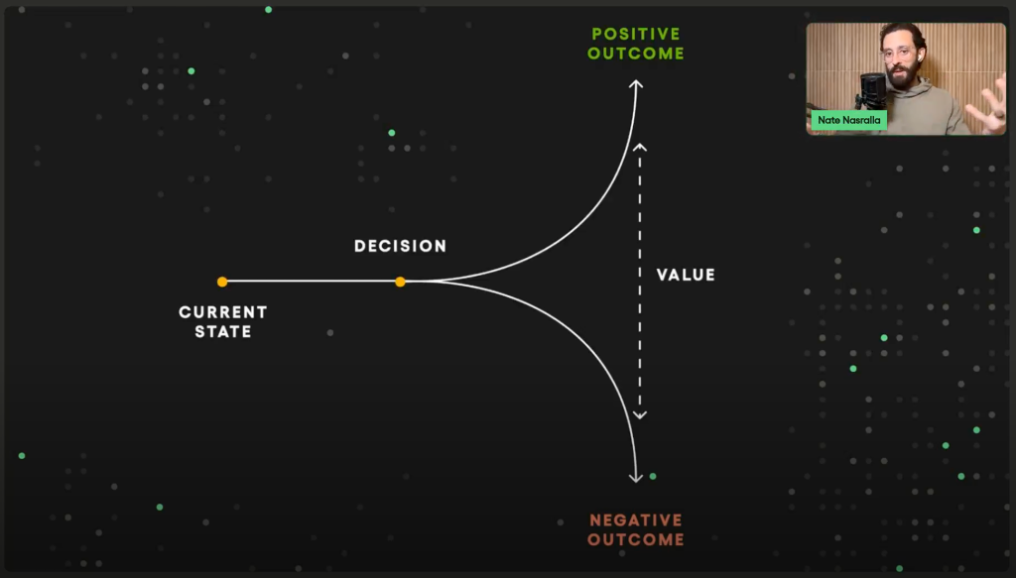
Written format: Because of this [major shift & unaddressed change], now's the time to [take this recommended action]. When you do, you'll unlock [positive outcomes], while avoiding the cost of [negative outcomes].
The message should use the customer's language and connect to a priority they already recognize. Wherever possible, add specific numbers or metrics around the outcomes.
Get the 4-Sentence Soundbite template here.
Reader exercise: Use Nate's suggestion to write soundbites for three active deals and compare them. If the messages are interchangeable, you need more account-specific insight. Where possible, replace broad outcomes with customer metrics.
This soundbite is at the center of all of your champion materials. You use this point of view as the foundation for a one-page business case.
2. Build a 1-page business case around the buyer's priorities
Now that you have your soundbite, it's time to give your champion a concise document that explains why the business should make this investment.
Nate and the people he coaches have had great success with these. In fact, immediately before the webinar, he got feedback on why the template is so valuable. Among the reasons this person mentioned, they said it's an excellent way to:
- Test if you have a real champion; if they won't engage, it's not a good sign (but it's a great signal)
- Multithread on the account by asking to get someone else's input
- Add value even if they don't end up buying by giving them a sharper problem statement than they had
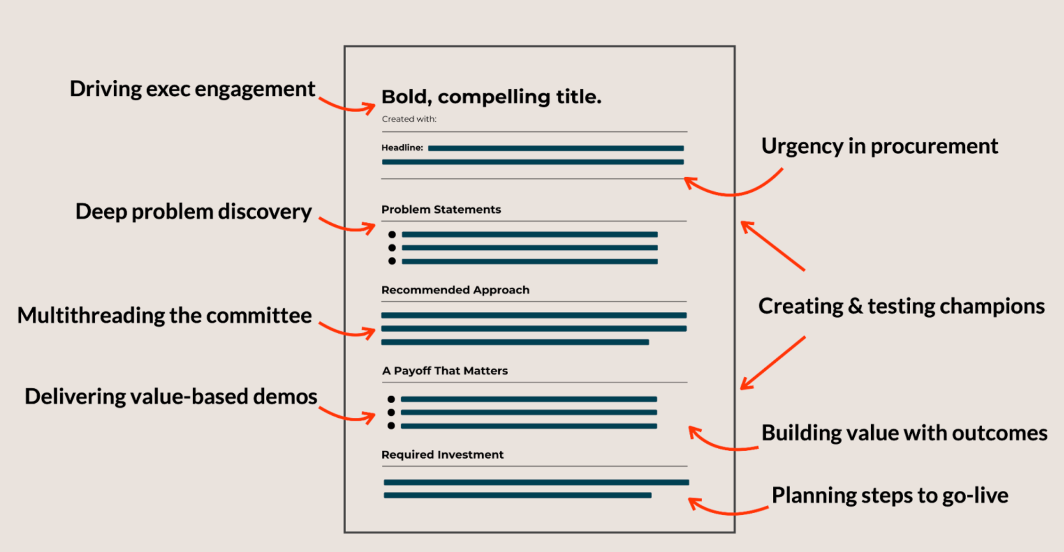
| Component | What it needs to establish |
|---|---|
| Title | Use the existing executive priority or the initiative the purchase supports, expressed in the customer's language. |
| Headline | Copy the soundbite you created here. |
| Problem statements | Create problem statements on what is preventing the customer from achieving their priority, supported by customer data and clear business consequences. Problem statements need layers such as metrics or costs to the business. Be sure to articulate problems for beyond those your champion is facing. |
| Recommended approach | Demonstrate why this category of investment is the right response, before making the case for a particular product. Remember, your number one competitor is not always the one on your battle card. Help the team look at different priorities and trade-offs and different levers an executive could pull to get the high-level outcome they want.<br>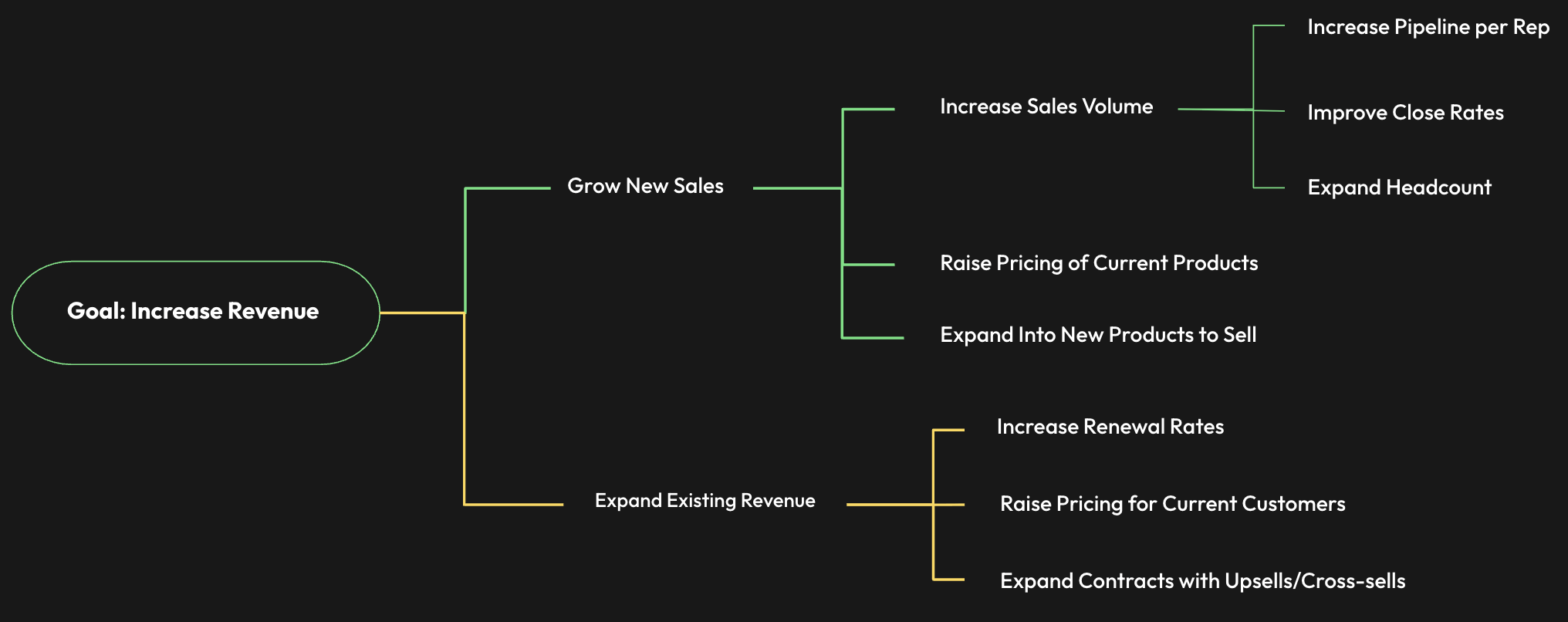 |
| Payoff | Show the desired outcome (key metric), current measurement baseline, and the target date for achieving each goal. This is important for ROI and also shows you what you're on the hook to deliver back to the business.<br>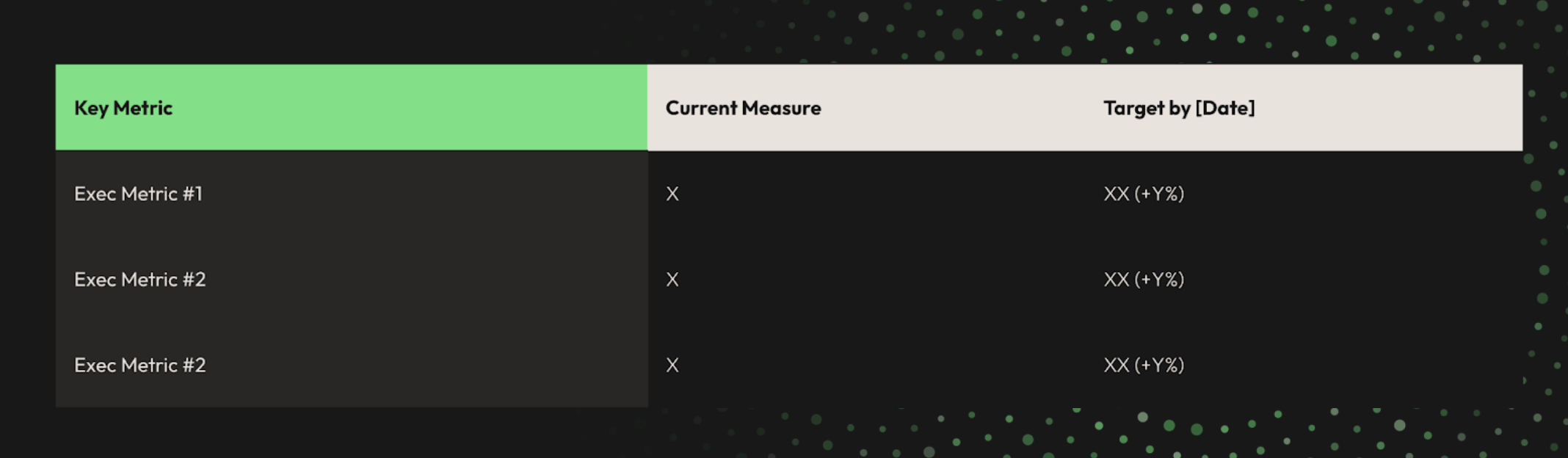 |
| Investment | Outline the dollars, of course, but also make clear what kind of time, people resources, and implementation work are required to deliver the desired outcomes. It's important not to downplay the necessary investments. From top to bottom, this business case is about building believability and credibility. |
Reader exercise: Pick one of your 4-sentence soundbites and build your first 1-page business case.
Get the 1-page business case template here.
3. Build the case together to test and strengthen champion commitment
Customer participation helps qualify the opportunity and prepares the internal champion to advocate for it. Developing the business case with your champion helps them internalize it and gives them the ability to explain the recommendation in their own words, even when they don't have the document open. As Nate said, "It's no longer your business case; it's theirs."
Here are some tips for getting it done:
- Fill it out yourself first and mark assumptions, incomplete reasoning, and missing numbers.
- Open the working document in editing mode during a conversation with your champion.
- Ask the champion for their input on all sections—are your assumptions accurate? What needs to be updated? What's missing?
- Ask your champion to invite those stakeholders to contribute relevant information or review the argument.
- Identify whose approval the recommendation needs.
Treat limited participation as a reason to investigate priorities, access, timing, and willingness to advocate. Have a conversation before you draw conclusions.
Reader exercise: Schedule a meeting with your prospect to work on the same business case from takeaway 2 above.
4. Use the business case template to focus deal reviews
A consistent business-case structure makes it easier for sales managers to identify where a deal needs attention.
Comparing business cases can make differences in qualification visible quickly. Nate calls it the "60-second deal review" because just pulling one business case up next to another makes it immediately obvious which deal is more or less qualified and why.
Managers can also ask 4 questions:
- 1.Is the deal connected to an executive priority?
- 2.Has the customer validated the problem and its business impact?
- 3.Whose input does the case reflect, and whose perspective is missing?
- 4.Are the expected outcome and required investment credible?
Example: If a case describes operational inefficiency but cannot establish its cost, the next step is to help the champion obtain or validate that measure. If the case reflects only one contact's perspective, identify the additional stakeholder whose support is required.
Reader action: Bring business cases into the next pipeline review. For each deal, agree on what the rep needs to clarify with the buyer and how they will do it. That might mean confirming the cost of the problem or asking the champion to involve the budget owner.
While a complex deal can't be fully assessed in a minute, this is an extremely helpful tool for quick diagnosis and focused coaching.
5. Track how buyer commitment changes over time
The evolution of buyer behavior helps reveal whether an opportunity is gaining or losing momentum.
Treat the business case as a living document. Track changes such as:
- Customer metrics becoming more specific or better validated
- Additional stakeholders contributing to the recommendation
- The champion initiating introductions or internal reviews
- Agreed actions happening at a different pace
Nate illustrates the last point with two deals at a similar point in discovery, each involving an executive meeting on Friday. One executive follows up that evening at 8pm and introduces procurement; the other responds the following Wednesday. Similar activities can suggest different levels of urgency depending on the timing and initiative involved.
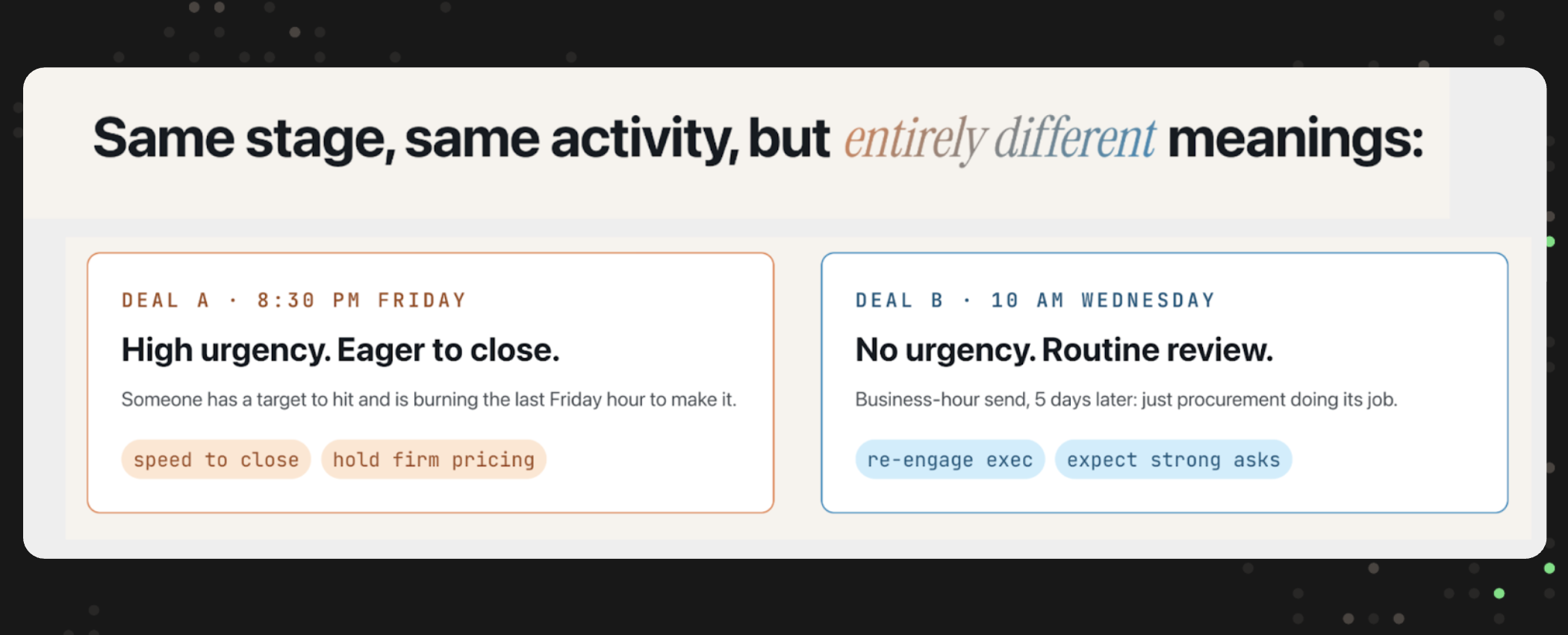
The same principle applies to the business case. When a buyer adds relevant stakeholders and supplies data to validate the financial impact, the case for the purchase gets stronger. If promised contributions keep slipping, the rep needs to find out what is preventing the buyer from following through. Tracking those changes helps managers see whether the opportunity is progressing or losing support.
Keep the interpretation contextual. Evaluate the pace against agreed deadlines, the customer's working patterns, and the other evidence in the deal.
Reader action: During each review, compare what the buyer agreed to do with what has happened since. Identify what has changed and what you need to clarify with the champion.
RevOps assist: Define which buyer actions indicate progress and capture who is involved, the agreed timing, and what actually happens. A decision-maker contributing to the case or a customer confirming a key metric gives managers something concrete to assess over time. Enablement can use examples from actual deals to teach reps how to recognize progress and respond when it slows. Conversation data and changes in deal health scores can help surface these patterns across opportunities. Sellers and managers then use their knowledge of the customer to decide what those changes mean and what to do next.
Watch the webinar
Nate shared some great examples for each of these takeaways during the webinar, so watch it to get the full picture.
Watch Now: How to Build Champions That Sell For You
You can also download the assets from the webinar here: